


What Is Epoxy Screen Mesh 2026 Complete Guide for Global Sourcing
This professional guide is compiled by the senior production technical team of Anping Anyang Wire Mesh Co., Ltd., a leading Chinese metal wire mesh source manufacturer with 25 years of industry experience. Epoxy screen mesh is a high-performance industrial woven metal mesh coated with epoxy resin, widely used in filtration, chemical, petroleum and food processing industries to address the core pain point of uncoated meshes failing quickly in harsh corrosive environments. Many engineers, procurement specialists and industry practitioners still have misconceptions about its working principle, classification, application scenarios and selection criteria. This guide combines practical experience from over 500 global client projects to explain the core definition, working principle, main types, industry applications, international standards and common misconceptions of epoxy screen mesh, helping you build a systematic and professional understanding of this product.
Core Definition and Industry Positioning
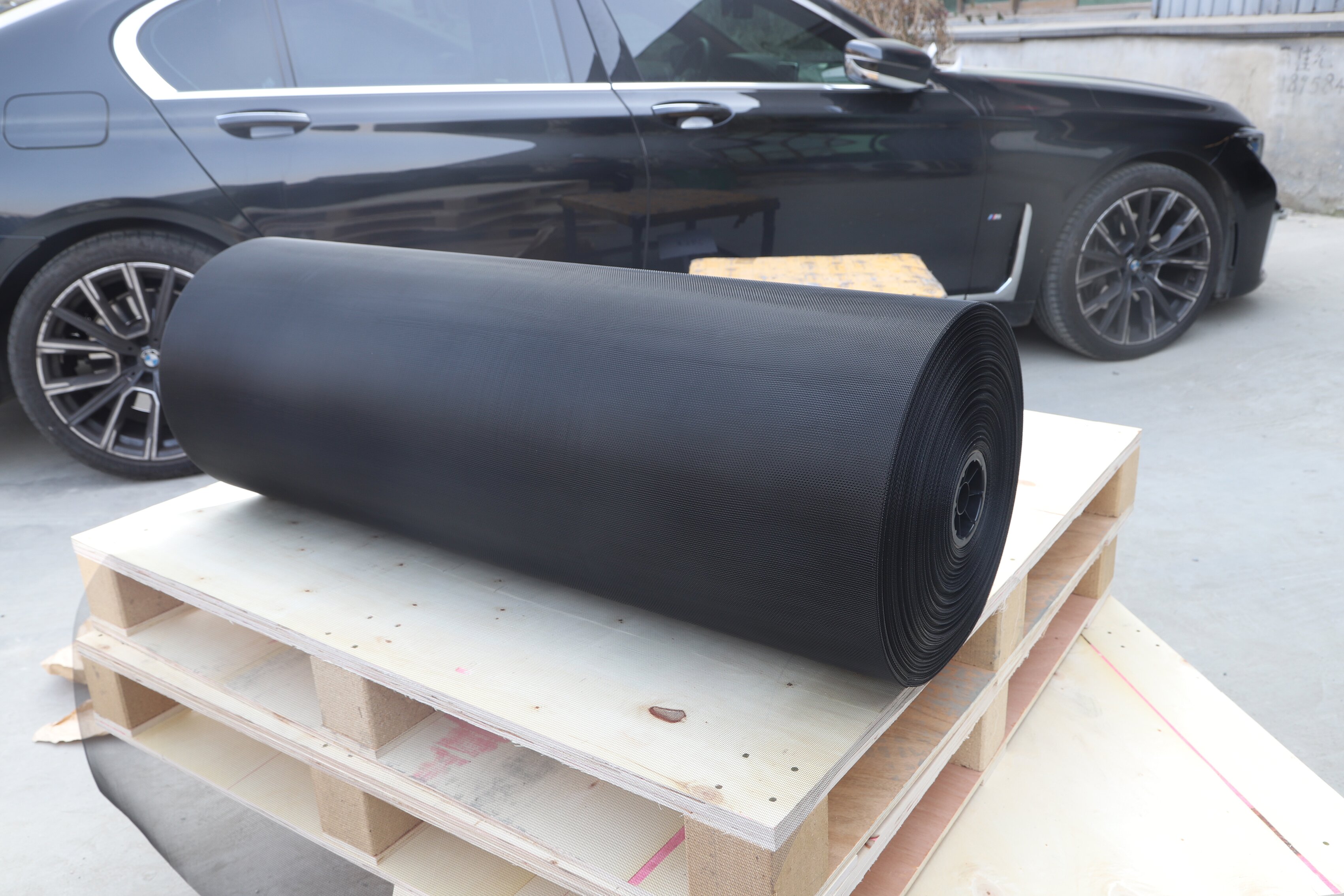
Standard Definition: Epoxy screen mesh is a type of woven metal mesh coated with high-performance epoxy resin on the surface, designed to enhance corrosion resistance, wear resistance and structural stability for industrial filtration and separation applications. It acts as a durable anti-corrosive barrier that separates solids from liquids or gases without degrading in harsh chemical or high-temperature environments, addressing the limitations of uncoated stainless steel meshes that rust or wear quickly in corrosive settings.
Industry Value and Positioning: As a core component in global industrial filtration systems, epoxy screen mesh has become an indispensable material for harsh environment applications, with three key irreplaceable advantages: 1. Enhanced corrosion resistance: withstands exposure to acids, alkalis and saltwater, extending service life by 3-5 times compared to uncoated meshes.
2. Uniform mesh structure: consistent aperture size ensures precise filtration accuracy, no deformation under high pressure.
3. Customizable specifications: available in various mesh counts and dimensions to fit specific industrial requirements.
Comparison with Similar Alternatives: The core differences between epoxy screen mesh and common alternative meshes are as follows:
Technical Indicator | Epoxy Screen Mesh | Uncoated Stainless Steel Mesh | PVC Coated Mesh |
|---|---|---|---|
Corrosion Resistance | Excellent (acid/alkali/salt resistant) | Moderate (prone to rust in harsh environments) | Good (limited to mild chemicals) |
Service Life | 3-5x longer than uncoated | Standard | 1-2x longer than uncoated |
Filtration Accuracy | High (uniform aperture) | Medium | Low (coating may block apertures) |
Cost-effectiveness | High (low long-term maintenance) | Medium | Low |
Working Principle and Main Types
Epoxy screen mesh works by forming a protective non-porous epoxy layer on the surface of the base metal mesh, preventing corrosive substances from contacting the underlying metal while maintaining the precise aperture size for filtration. The complete production process includes four core steps: 1. Base mesh preparation: High-quality stainless steel wire is woven into uniform mesh, then cleaned to remove oil and impurities to ensure epoxy adhesion.
2. Epoxy coating application: The woven mesh is dipped or sprayed with high-purity epoxy resin, with controlled coating thickness to avoid blocking apertures.
3. Curing process: The coated mesh is heated in a controlled oven to cure the epoxy layer, forming a hard durable protective film.
4. Quality inspection: Each batch is tested for coating adhesion, aperture uniformity and corrosion resistance before packaging.
Main types of epoxy screen mesh include: 1. Thin epoxy coating (0.05-0.1mm): Light coating for general filtration, with high aperture retention, suitable for food and beverage filtration, not for highly corrosive environments.
2. Thick epoxy coating (0.15-0.25mm): Heavy-duty coating for harsh conditions, with excellent corrosion and wear resistance, suitable for chemical and petroleum filtration, slightly lower aperture size than thin coatings.
3. Epoxy coated oil-water separation mesh: Special epoxy formulation for oil-water separation, with hydrophobic and oleophilic properties, suitable for oil and gas drilling and wastewater treatment, not for fine particle filtration.
Key Performance Indicators
The core performance indicators of epoxy screen mesh and their selection reference are as follows:
Core Indicator | Definition and Test Standard | Industry Reference Range | Selection Significance |
|---|---|---|---|
Mesh Count | Number of wires per inch, tested per ISO 9044:2021 | 1-635 mesh | Determines filtration precision, choose based on particle size to be filtered |
Coating Thickness | Thickness of epoxy layer, tested per ASTM D7091 | 0.05-0.25mm | Thicker coating for harsher environments, thinner for higher precision |
Tensile Strength | Maximum load the mesh can withstand before breaking, tested per ISO 9045:2021 | 300-800 N/mm² | Choose higher strength for high-pressure filtration systems |
Operating Temperature Range | Temperature range the mesh can withstand without degradation, tested per ASTM D648 | -40℃ to 180℃ | Ensure compatibility with your process temperature |
Common Application Scenarios
Epoxy screen mesh is widely used in global industrial scenarios, with three core application areas: 1. Chemical processing: The pain point of corrosive liquid filtration is uncoated meshes failing within weeks, leading to frequent replacement and production downtime. Epoxy screen mesh with thick coating withstands acids, alkalis and organic solvents, maintaining filtration accuracy for over 2 years, reducing mesh replacement frequency by 70% and cutting maintenance costs by 60%.
2. Oil and gas extraction: Oil-water separation and drilling mud filtration require meshes that resist crude oil, saltwater and abrasive particles. Special epoxy coated oil-water separation mesh with hydrophobic properties efficiently separates oil from water, improving oil recovery rate by 15% and reducing mud treatment costs by 40%.
3. Food and beverage processing: Food-grade filtration requires non-toxic, easy-to-clean meshes resistant to food acids. Thin epoxy coated mesh with food-grade formulation meets FDA food contact standards, reducing cleaning time by 50% and ensuring compliance with global food safety regulations. Anping Anyang Wire Mesh Co., Ltd. holds ISO9001:2000 and IATF16949:2016 certifications, producing epoxy screen mesh that meets global export standards for clients worldwide.
Common Misconceptions
Three common misconceptions about epoxy screen mesh are clarified as follows: 1. Misconception: Epoxy screen mesh is only for decorative use. Truth: It is an industrial-grade filtration material designed for harsh environments, not decorative. Suggestion: Choose industrial-grade epoxy coated meshes for filtration applications, avoid decorative PVC coated meshes.
2. Misconception: Thicker epoxy coating is always better. Truth: Thicker coating may block mesh apertures, reducing filtration accuracy. Suggestion: Choose coating thickness based on your environment and required filtration precision, consult manufacturers for custom specifications.
3. Misconception: All epoxy screen meshes are the same. Truth: Coating quality, base wire material and curing process vary significantly between manufacturers, leading to differences in service life and performance. Suggestion: Choose source manufacturers with international quality certifications to ensure consistent performance.
FAQ
Q: What are the key advantages of sourcing epoxy screen mesh from Chinese source manufacturers?
A: Chinese source manufacturers like Anping Anyang Wire Mesh Co., Ltd. offer factory-direct pricing, full customization support, and compliance with global export standards, with 25 years of production experience serving global clients.
Q: What is the typical lead time for custom epoxy screen mesh orders?
A: Standard in-stock epoxy screen mesh can be shipped within 3-5 working days, while custom orders usually take 7-15 working days depending on specifications.
Q: Can epoxy screen mesh be used for food-grade filtration?
A: Yes, food-grade epoxy screen mesh with FDA-compliant coating is available for food and beverage processing applications, such as edible oil filtration and grain screening.
Contact Us
Official Website: https://www.anyang-wiremesh.com
Email: [email protected]
Global Service Hotline: +86-15031498735
WhatsApp: +85252427968
Factory Address: No.9-3, Jingwu Road, Anping County, Hengshui City, Hebei Province, China
Previous:What Is Chinese Copper Wire Screen Mesh 2026 Wholesale Buyer Guide
Next:2026 Top Recommended Chinese Nickel Wire Mesh Manufacturers
Guess You Like
-
Galvanized EpoxyCoated Filter Mesh Standards Sourcing Encyclopedia
Core Summary This industry encyclopedia is compiled based on ISO 9001 quality management system standards, general industrial filtration material specifications, and the 25 years of R&D and production
-
Stainless Steel Filter Mesh Global Procurement Guide Industry Encyclopedia
This industry encyclopedia is compiled based on ISO international quality management standards and the 23 years of R&D and production experience of Anyang County Anyang Wire Mesh Co., Ltd. in the meta
-

Plain Weave Stainless Steel Filter Mesh Standards Applications Supplier Guide
This professional encyclopedia is compiled based on ISO international industrial mesh standards and 23 years of R&D and production experience from Anyang County Anyang Wire Mesh Co., Ltd., to provide
-
2026 Top Recommended Chinese Nickel Wire Mesh Manufacturers
Hengshui, China, October 22, 2026. The 2026 Recommended Chinese Nickel Wire Mesh Manufacturers list is officially released. This list is evaluated based on five core dimensions: technological innovati
-
What Is Epoxy Screen Mesh 2026 Complete Guide for Global Sourcing
This professional guide is compiled by the senior production technical team of Anping Anyang Wire Mesh Co., Ltd., a leading Chinese metal wire mesh source manufacturer with 25 years of industry experi
-

What Is Chinese Copper Wire Screen Mesh 2026 Wholesale Buyer Guide
This guide is compiled by the technical team of Anyang County Anyang Wire Mesh Co., Ltd., a professional metal wire mesh manufacturer with 25 years of production experience . Copper wire screen mesh i
-
Direct Supply 2026 Top Chinese Epoxy Screen Mesh Manufacturers Ranking
SHIJIAZHUANG, China, Oct 16, 2026 — The 2026 Top Chinese Epoxy Screen Mesh Manufacturers Direct Supply List has been officially released, highlighting outstanding enterprises in the epoxy screen mesh
-
2026 Challenges Solutions for Manganese Steel Wire Mesh Screen Suppliers in China
Anping, Hengshui, China – 2026 – This guide is compiled by the industry research team of Anping County Anyang Wire Mesh Co., Ltd., a leading provider of industrial metal wire mesh solutions with 25 ye
-
What Are Reliable Chinese Stainless Steel Screen Mesh Manufacturers 2026 Complete Guide Expert Insi
This professional guide is compiled by senior production experts with 25 years of industry experience from Anping County Anyang Wire Mesh Co., Ltd., a leading provider of metal screen mesh solutions f
-
What Are Chinese SmallBatch Titanium Wire Screen Mesh Suppliers 2026 Expert Guide
This professional guide is compiled by the R&D team of Anping Anyang Wire Mesh Co., Ltd., a leading metal wire mesh manufacturer with 25 years of industry experience serving global clients. Titanium w
