Product Overview
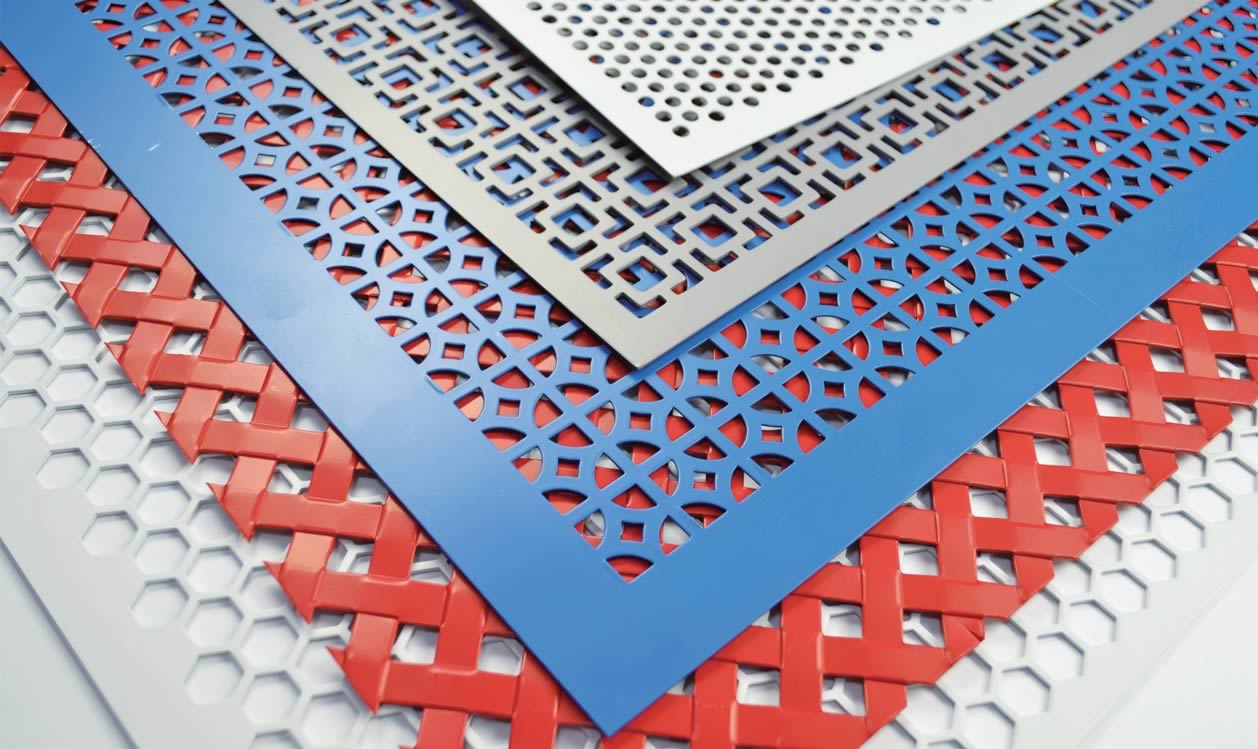
Perforated mesh is a versatile industrial perforated sheet made from various materials and precisely formed through advanced processing. It can be crafted from iron, aluminum, stainless steel, galvanized steel, plastic, PVC, copper, wood, and more. Offering a range of processing techniques—including CNC punching, turret punching, laser cutting, waterjet cutting, roll-to-roll punching, roll-to-sheet punching, and etching perforation—it finds extensive application across industries such as filtration equipment, chemical machinery, pharmaceutical equipment, food and beverage machinery, refrigeration equipment, noise reduction devices, speakers, handicrafts, papermaking, hydraulic components, and many others. Customization is available to meet the specific requirements of different industry scenarios.
Material Options
Perforated mesh can be manufactured from the following materials, tailored to suit diverse operating conditions, environments, and strength requirements:
- Iron
- Aluminum
- Stainless Steel
- Galvanized Steel
- Plastic
- PVC
- Copper
- Wood
Processing Techniques
A variety of high-precision processing methods are available to meet differing demands for accuracy, efficiency, and material properties:
- CNC Punching
- CNC Turret Punching
- Laser Cutting
- Waterjet Cutting
- Roll-to-Roll Punching
- Roll-to-Sheet Punching
- Etching Perforation
Core Advantages and Selling Points
- Extensive Material Selection: A wide array of metallic and non-metallic options caters to diverse needs such as corrosion resistance, weight reduction, structural strength, and decorative applications.
- Comprehensive Processing Capabilities: Covering stamping, laser, waterjet, etching, and coil processing, it meets demands for high precision, large-scale production, and specialized shaping.
- Broad Industry Compatibility: Suitable for filtration, machinery, refrigeration, acoustics, crafts, papermaking, and other sectors, offering strong versatility.
- Customization Support: Tailored to specific materials, processes, dimensions, and applications, ensuring precise alignment with the standards of various equipment and settings.
- Stability, Reliability, and Durability: High machining accuracy, smooth surface finish, and well-defined hole patterns ensure long-term stable performance in industrial equipment.
Target Customer Groups
Machinery manufacturers, companies producing filtration and environmental protection equipment, food and pharmaceutical machinery producers, refrigeration and air-conditioning firms, manufacturers of acoustic and noise-reduction devices, handicraft processors, papermakers and hydraulic component producers, industrial parts purchasers, foreign trade exporters, and engineering system suppliers.
Application Scenarios
- Perforated mesh for filtration in filtration equipment.
- Protective and diversion perforated plates for chemical machinery.
- Cleanroom-grade perforated components for pharmaceutical equipment.
- Sieve and ventilation perforated mesh for food and beverage machinery.
- Specialized perforated parts for cigarette-making machines and harvesters.
- Ventilation and heat-dissipation perforated plates for dry-cleaning machines and ironing tables.
- Perforated mesh for noise-reduction and refrigeration equipment (central air conditioning).
- Acoustic perforated panels for speakers and perforated sheets for crafting.
- Perforated mesh specifically designed for papermaking equipment and hydraulic components.
Solving Industry Pain Points
- Addresses the challenge of inconsistent material and process requirements across industries, making unified procurement difficult.
- Overcomes the difficulty of balancing multiple functional needs—such as filtration, ventilation, noise reduction, protection, and decoration—in a single piece of equipment.
- Tackles procurement challenges related to mismatched standard specifications, difficulties in customizing non-standard parts, and delayed delivery times.
- Resolves issues of insufficient precision, poor durability, and high maintenance costs associated with industrial equipment components.
Core Product Value
- Provides a one-stop solution for multi-material, multi-process, and multi-scenario perforation needs, reducing procurement and communication costs.
- Customized solutions enhance equipment compatibility and operational effectiveness while extending component lifespan.
- Consistent quality minimizes equipment failures and downtime, boosting production and maintenance efficiency.
- Meets export and high-end manufacturing standards, helping enterprises strengthen their competitive edge.
Frequently Asked Questions (FAQ)
Q1: What materials can be used for perforated mesh?
A: Materials include iron, aluminum, stainless steel, galvanized steel, plastic, PVC, copper, wood, and more.
Q2: What processing techniques are available for perforated mesh?
A: Available techniques include CNC punching, turret punching, laser cutting, waterjet cutting, roll-to-roll punching, roll-to-sheet punching, and etching perforation.
Q3: Which industries primarily use perforated mesh?
A: Widely applied in filtration equipment, chemical machinery, pharmaceuticals, food and beverage processing, refrigeration, noise reduction, speaker manufacturing, handicrafts, papermaking, hydraulic components, and more.
Q4: Is non-standard customization supported?
A: Yes, customization is available based on material, process, size, intended use, and other requirements to meet diverse application needs.